The slowing population boom

Eight billion people

The world passed 8 billion people a few years ago in November 2022. It took all of human history until 1804 to reach the first billion.

Look at the right column, The gap between milestones shrank for over a century and then stopped shrinking. That flattening is the the main aspect of this presentation.

Source: UN Department of Economic and Social Affairs, World Population Prospects
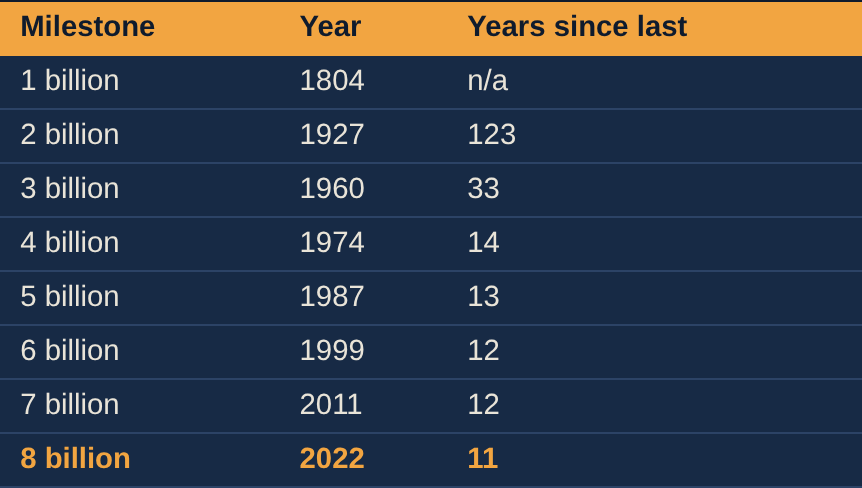
Table of world population milestones, 1804 to 2022

The gap stopped shrinking

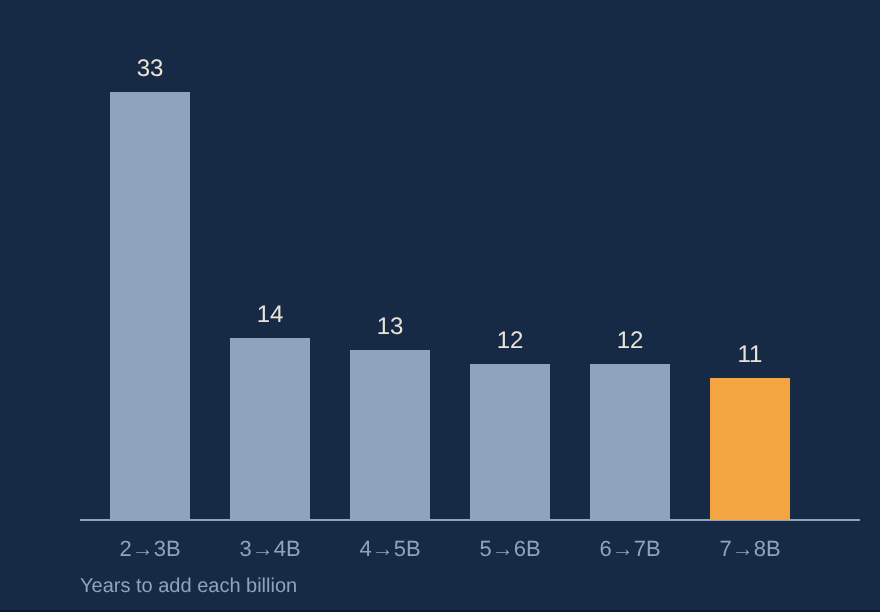
Each bar is how many years it took to add one more billion to the population. From 1927 to 1974 the wait shrunk from 33 years to 14.

After that it barely moved much. Humans still adding a billion roughly every 12 years, but the rapid acceleration of population growth is gone, and the next billion is expected to take much longer.

Bar chart of years taken to add each billion people

Why: families got smaller

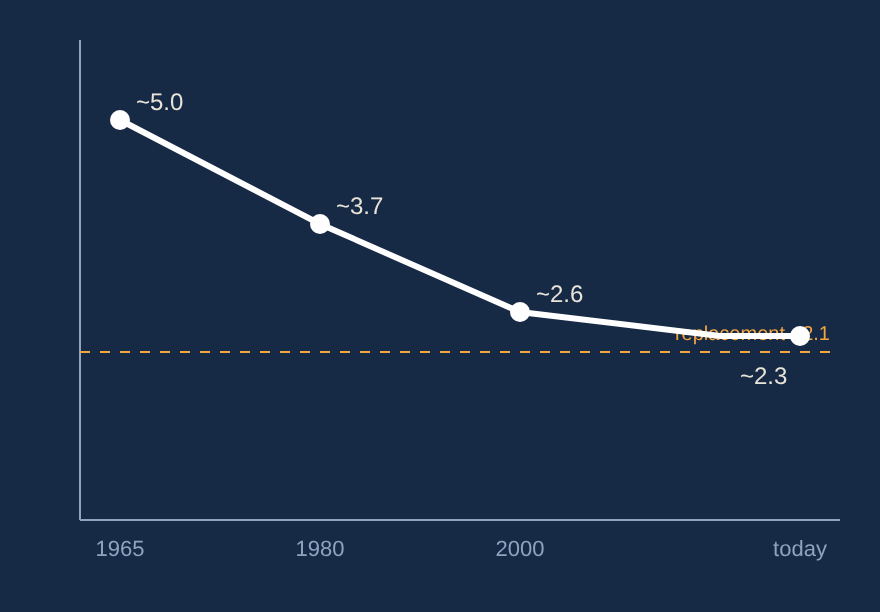
In the mid 1960s the average woman worldwide had about 5 children. Today it's about 2.3, hovering close to the replacement level of roughly 2.1.

Population keeps rising for a while after fertility drops, because there are still many younger people having kids. But the process is slowing.

Approximate global fertility, UN World Population Prospects

Line chart of global fertility falling from about 5 to 2.3

A peak is coming

~10.3B

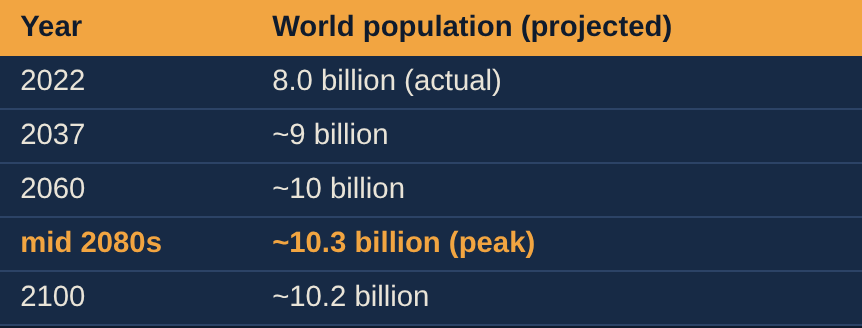
The UN's 2024 projection has world population peaking out around 10.3 billion in the mid 2080s, then slowly declining from there.

Some countries are actually shrinking rigth now. Japan's population has been falling since the late 2000s. China's started falling in 2022.

Table of UN population projections to 2100

UN World Population Prospects 2024, medium scenario. Projections, not certainties.

The old fear is outdated

For most of the 20th century the worry was runaway growth with no ceiling. The numbers don't show that anymore. They show a world that could stop growing within the lifetime of people born today.

The harder questions now are about aging: a smaller workforce supporting more retired people, and countries competing for young people. The problem people were afraid of in the 60s has changed.